
On this page
Your needs, this model
Does it fit your priorities?
Does the manual identify this as a 9-cup Classic pitcher?
Yes. Santevia's linked manual cover names a 9 Cup Alkaline Pitcher, but that does not establish ready-filtered volume or an exact body SKU.
Explore this need in the finder →Can this reference meet a stated 80-gallon Classic filter limit?
The Classic manual and current filter page give a two-month / 300 L / 80-gallon schedule. Higher minimums should not match; the time limit still applies.
Explore this need in the finder →Does the exact Classic route document lead, fluoride or microbial reduction?
No such result was established in the reviewed Classic manual or exact current replacement page. The page states only up to 90% chlorine reduction; MINA data should not be transferred.
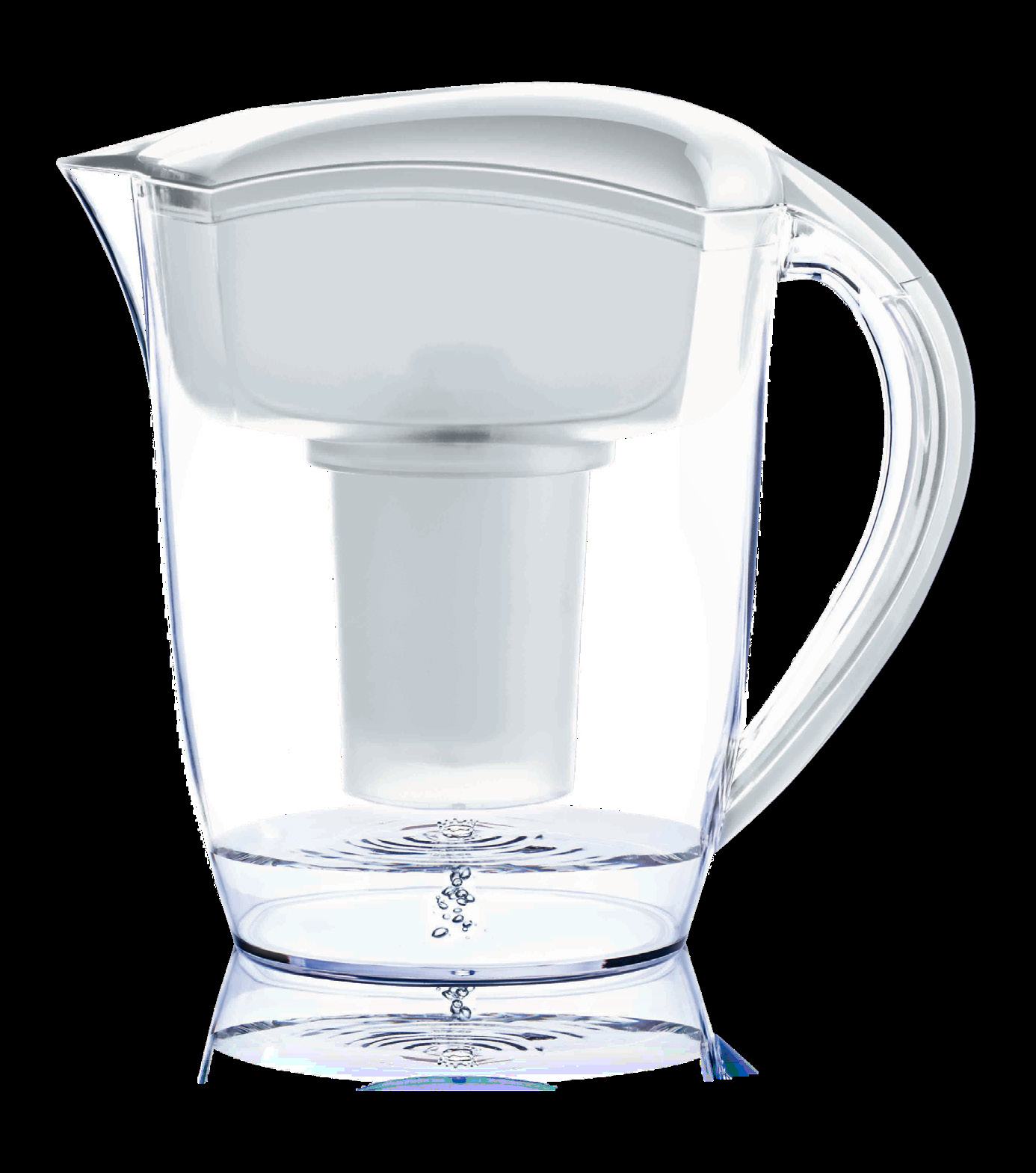
Explore this need in the finder →The Santevia Classic is useful today mainly as an owner-identification reference, not as a confirmed new-purchase choice. Santevia’s support center links a Classic Pitcher manual whose cover names a “9 Cup Alkaline Pitcher.” The manual describes a two-chamber, hand-filled pitcher with a filter seated in its upper tank. Santevia’s current product feed lists Classic replacement filters but not a Classic pitcher body, so I cannot establish that the body is still sold new or assign it a body SKU. The current filter page does say the Classic Filter is compatible with the Classic Alkaline Pitcher, but it supplies no year, serial-number or body-revision crosswalk.
What “nine cups” and the filter cycle mean
The nine-cup figure is the manual’s name for the pitcher, not nine cups of filtered water ready at one time. Water first sits in the upper reservoir while it passes through the filter; that chamber takes up space above the lower water store. If you need a large ready-to-pour batch, plan on refilling the upper tank rather than treating the title as a lower-chamber volume. The manual does not give exterior dimensions, so a refrigerator shelf or door fit needs an actual measurement from the unit.
The Classic manual and Santevia’s current support guidance put the filter schedule at two months or 300 L / 80 US gallons. The manual describes water flowing through in about two minutes, but it does not specify a timed test volume or conditions. Treat that as the maker’s quick-flow description, not a guaranteed refill time for your household. The current Classic replacement page offers a single filter (9AP-421) and a three-pack (9AP-422), and gives a chlorine-reduction claim of up to 90%. That is the specific performance result I can attach to this filter route; I did not find a lead, fluoride or microbial result for the Classic filter on the reviewed page or manual. Do not infer one from mineralization language or from a different Santevia cartridge.
There is a small but important setup routine
The manual tells you to rinse the new Classic Filter under running water for three to five minutes, shaking it until the water runs clear. Seat it firmly at the bottom of the upper tank, then run two upper-tank loads through the pitcher before drinking; the manual says to discard those fills or use them for plants. That is a more involved first start than simply filling the reservoir once. The manual’s filter diagram lists stainless-steel mesh, granular activated carbon, ion-exchange resin and ceramic or mineral elements. Its wording about filter components is not a certification statement for the assembled pitcher, and it does not replace a model-specific performance table.
Care is manageable if you remember the lid timer. The Classic has a 60-day countdown reminder that the manual says to start and reset by hand when a new filter is installed. It is water-resistant, not waterproof: do not submerge the lid or put it in a dishwasher. Santevia recommends hand-washing the pitcher, upper tank and lid when replacing the filter. Those instructions are a practical reason to avoid treating the timer as a water-quality sensor; it counts days, not gallons or contaminant breakthrough.
Keep its water-source limits in view
Santevia’s manual says the pitcher is intended only for biologically safe, potable water. During a local boil-water advisory, it says to boil the water before using the pitcher. This is not a method for making untreated or unknown-source water safe. Likewise, the current filter page’s chlorine claim should not be broadened into a lead, fluoride or disinfection promise. If one of those results is essential, look for a product-and-filter data sheet that states that exact result and its test conditions.
The manual calls the pitcher BPA-free plastic, but the reviewed material does not name a resin or say BPS-free. It also does not give outside height, width, weight or an exact model number. Keep those gaps separate from the facts that are clear: a nine-cup manual label, a hand-filled gravity route, a 60-day lid reminder and the current Classic replacement-filter claim. The current parts page is useful, but the lack of a body revision crosswalk means owners should verify the filter and pitcher generation before ordering rather than assuming all historic pieces interchange.
How to compare it now
If you already own a Classic pitcher, the manual is the right place to check its preparation and reminder routine, and the replacement page is the maker’s current statement about the Classic filter. If you are choosing a pitcher today, compare the current Santevia MINA separately: its manufacturer documents a current 2 L / nine-cup body, black and white SKUs, dimensions and an included MINA Fluoride Filter. The current MINA filter-performance material is tied to that named route; it should not be transferred to the Classic cartridge. For a different routine or a result such as lead reduction, compare exact filter records from other current models instead of reading the word “alkaline” as a performance claim.
This assessment keeps the Classic visible because owners may still need its manual and replacement part, while excluding it from current buying recommendations until the pitcher-body offer is established. Compare the current MINA pitcher assessment · Read the separate MINA filter comparison · Open Santevia’s Classic Pitcher manual page · See the current Classic replacement-filter page
Key details at a glance
| Listed pitcher capacity | 9 cups |
|---|---|
| Included filter | Santevia classic |
| Stated filter capacity | 80 gal |
| Typical replacement interval | 2 months |
| Reusable filter shell | No |
| Made without BPA | Yes |
More specifications and setup details
| What the filter is documented to reduce | The exact current Classic filter page says six-stage filtration and up to 90% chlorine reduction. No lead, fluoride, or microbial result was stated on the reviewed exact filter page or Classic manual. Do not transfer the separate MINA filter's results to this route. |
|---|---|
| Use and care | Use only with already-potable, biologically safe cold water. The manual says to boil water during a boil-water advisory. This gravity pitcher does not make unsafe or unknown-source water safe. |
| Separate TDS meter included | No |
| Dispense while reservoir filters | No |
| Manufacturer dimensions as listed | The manual supplies no outside dimensions or weight; measure the individual pitcher for shelf fit. |
| Pitcher material | BPA-free plastic per manual; exact resin and BPS status are not stated in the reviewed manual. |
| Button-controlled electric dispensing | No |
| Stainless-steel body | No |
| Glass water reservoir | No |
| Mineral-boost feature | Yes |
Use the exact model’s instructions for operating limits, supplied equipment and version differences.
Sources for this assessment
Check the exact filter setup before you shop.
Capacity, filter type and the written reduction claims belong to the pitcher-and-cartridge combination, not just the pitcher shape.