
Your needs, this model
Does it fit your priorities?
Is a ten-cup listed vessel with a glass outer body the size and form you need?
Exact PT-09W detail listings identify ten cups and a glass outer jug; the upper reservoir and lid remain plastic, and one fill is not the full-vessel output.
Explore this need in the finder →Do you want the standard Waterdrop PF01A-P replacement route rather than the alkaline-feature PF-AL route?
PT-09W upgraded package listings name PF01A-P; the PT-09B-A uses a separate PF-AL code. The exact manual does not identify every package's supplied cartridge code.
Explore this need in the finder →Is a documented lead-reduction result essential for this exact configuration?
No PT-09W/PF01A-P performance table or matching directory record was located; retailer claims alone do not qualify the model for a hard lead-result requirement.
Explore this need in the finder →A larger glass-body Waterdrop pitcher, not an all-glass water path
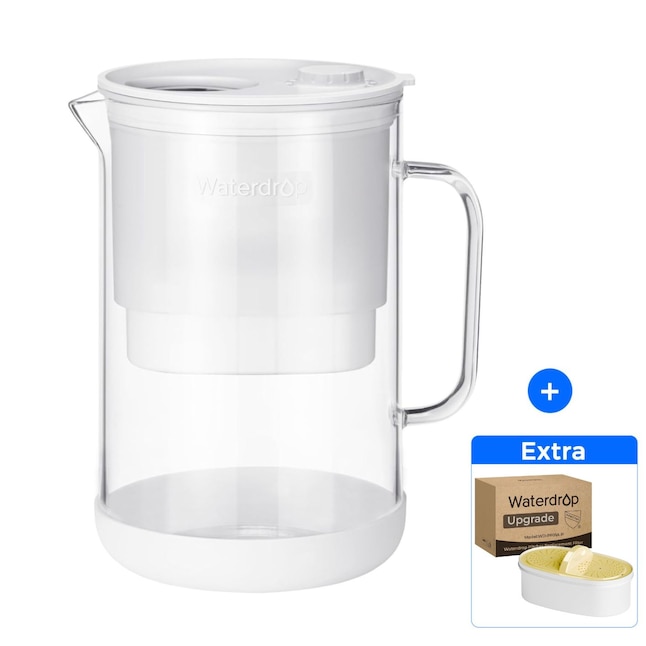
The Waterdrop PT-09W is a 10-cup pour-through pitcher with a clear glass outer jug and a plastic upper reservoir, lid and other internal components. It is the more conventional of the glass PT-09 options: its replacement route is the standard PF01A-P family, not the WD-PF-AL alkaline/mineral-feature filter used by the PT-09B-A. Retailers list white PT-09W packages under several codes, including the one-filter WD-PT-09W, the BL-WD-PT-09W-1ST bundle and WD-PT-09W-01A-P with an upgraded extra filter. The black PT-09BL listings use the same standard family. The extra-cartridge package suffix changes what is supplied, not the pitcher’s capacity or filtration route; check the box or SKU before ordering a refill.
“10 cup” is the listed capacity of the full vessel, not a promise that a single upper-reservoir load instantly produces ten cups of ready water. A gravity pitcher needs time to pass water through the filter, and the fill basket must be refilled as it drains. The tall body, handle and visible glass can make it more pleasant to keep on a counter than a plain opaque jug, but the glass shell adds weight and breakage risk. The plastic inner liner remains in the water path, so this is not the choice for someone who requires glass-only water contact.
Budget for the manual’s two-month limit
The WD-PT-09 manual gives the standard glass pitcher a maximum filter schedule of 100 gallons or two months, whichever arrives first. A month dial in the lid is a reminder you set by hand; it is not a flow meter, contaminant sensor or automatic alert. If your household goes through a lot of water, use the gallon ceiling rather than treating the two-month mark as a guaranteed life. The included filter count and exact spare-cartridge code depend on the package: the manual covers the WD-PT-09 family but does not identify the supplied cartridge’s printed replacement code. A PT-09W bundle listing names PF01A-P for the standard route. Match the code on the replacement box to your exact pitcher rather than assuming every Waterdrop pitcher uses the same cartridge.
The manual’s first-start sequence is unusually important to retain: wash your hands, soak the filter in cold tap water for ten minutes, hand-wash the pitcher, lid and reservoir with mild detergent, seat the cartridge firmly, then filter cold tap water and discard the first two pitcherfuls. The manual limits water temperature to 41–100°F (5–38°C), says not to use microbiologically unsafe or unknown-quality water without suitable disinfection, and warns against freezing the cartridge. It recommends hand washing only, no dishwasher or abrasive cleaners, and cool storage away from sun when the unit is not in use. Those are manageable steps, but they are less convenient than a pitcher with dishwasher-safe components or a longer documented cartridge interval.
Keep the marketing claims separate from a verified test result
A Best Buy listing for the PT-09W advertises several NSF/ANSI numbers and contaminant-reduction language. I did not locate a PT-09W/PF01A-P performance sheet or a matching independent directory record that substantiates a lead or microbial result for this exact pitcher/filter combination. I therefore treat those retailer statements as listing claims, not a hard-tested recommendation. The manual says the filter does not reduce total dissolved solids (TDS), and it cautions that a TDS reading is not a water-quality test. A taste-and-odor pitcher is not an answer to unsafe water or to a contaminant concern that requires a specified tested reduction; check a source water report and choose a configuration with an exact matching performance sheet for that need.
Dimensions need a similar caution. The manual lists 8.03 × 6.02 × 9.72 inches but does not reliably name which number is height, width or depth, while retailer listings sort dimensions differently. I have not converted those numbers into refrigerator-clearance promises. Measure the pitcher, handle and lid against your shelf before purchase. Likewise, a “BPA-free” retail title is not enough here to identify every polymer in the lid and inner assembly; the exact manual does not name the resin or give a full material schedule.
Who should compare it with the alkaline PT-09B-A?
The PT-09W fits someone who wants the larger 10-cup glass-bodied form, a standard filter route and a manual month dial, and who is comfortable hand-washing, replacing the cartridge on a short schedule and using only potable cold tap water. It does not have the maker-listed PF-AL alkaline feature. If that feature is the reason for shopping, compare the blue PT-09B-A instead; it uses a different filter code and the public evidence for its exact manual and TDS claim is less complete. If you prefer Waterdrop’s smaller seven-cup glass form, the PT-72W review describes its similar standard-filter distinction, but its capacity is smaller and it has its own manual and package details. The ED02 is a powered alternative rather than a pour-through pitcher, so it changes the refill and dispensing routine as well as the form factor.
In the finder, choosing ten cups and a glass reservoir narrows the shape. Selecting the standard PF01A-P route separates this model from the alkaline-feature version; asking for the maker-listed alkaline option should not return the PT-09W. Requiring a confirmed lead result or microbial reduction excludes it because the exact evidence was not located. That is a deliberate limit, not a judgment that every tap-water user needs the same contaminant profile.
Evidence trail: Setup, care, temperature, first-flush and service limits come from the archived Waterdrop-branded WD-PT-09 manual (10-page bilingual scan; the English section was inspected). The model/capacity and material distinction were checked against the exact PT-09W listing and the PT-09W upgraded-filter package listing. Retailer standards and reduction language are not treated as verified performance data.
Key details at a glance
| Listed pitcher capacity | 10 cups |
|---|---|
| Included filter | Waterdrop PF01A-P standard PT-72 glass-pitcher replacement route |
| Stated filter capacity | 100 gal |
| Typical replacement interval | 2 months |
| Reusable filter shell | No |
| What the filter is documented to reduce | The WD-PT-09 manual specifies a 100-gallon/two-month maximum and states the filter does not reduce TDS. Retailer listings claim NSF/ANSI and contaminant reductions, but no exact PT-09W/PF01A-P performance table or matching directory record was located; lead and microbial reduction remain unknown. |
| Use and care | Use cold potable tap water only at 41–100 F (5–38 C). Manual cautions against microbiologically unsafe or unknown-quality water without suitable disinfection, and against freezing the filter. |
| Manufacturer dimensions as listed | WD-PT-09 manual lists 8.03 × 6.02 × 9.72 inches without reliably naming axes; retailer dimension ordering differs, so no axis is hard-matched. |
| Pitcher material | Glass outer pitcher body with a plastic upper reservoir/inner liner and plastic lid components; exact polymer and BPA status are not established in the exact manual. |
| Glass water reservoir | Yes |
Use the exact model’s instructions for operating limits, supplied equipment and version differences.
Sources for this assessment
Check the exact filter setup before you shop.
Capacity, filter type and the written reduction claims belong to the pitcher-and-cartridge combination, not just the pitcher shape.