
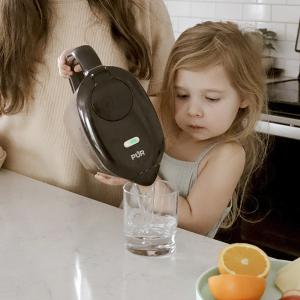
Your needs, this model
Does it fit your priorities?
Do you need the earlier seven-cup PLUS version identified by PPT710?
PUR's 2023 guide names PPT710X and the current support listing groups PPT710 with the newer PPT711 family. This is the older, seven-cup code path; check the molded or printed model on your pitcher.
Explore this need in the finder →Is the older CRF-950Z PLUS cartridge the filter route you want to identify?
The 2023 PUR sheet names CRF-950Z as the PLUS filter for PPT710X. Do not infer that a PLUS label alone means the same claim set as current PPF951K.
Explore this need in the finder →Can you use this earlier PLUS model when a lead-reduction result is not essential?
Yes, for a need that fits the CRF-950Z sheet's named results. The 2023 sheet does not list lead for this exact filter, so a lead requirement must reject it.
Explore this need in the finder →What the PPT710 code identifies
PPT710 is a PUR PLUS seven-cup pitcher configuration documented in PUR’s 2023 quick-start guide and filter data sheet. PUR’s current support page groups PPT710 with the newer PPT711 under its seven-cup PLUS heading, while the current product page identifies PPT711 as the sales SKU. That shared heading is useful for identifying the general body family, but it is not a reason to substitute the newer model’s cartridge record for an older PPT710 unit. Check the model printed or molded on the pitcher and read the cartridge label before treating any replacement as the right one.
This review is most useful to someone who owns, has found, or is comparing a pitcher explicitly marked PPT710. It is not a recommendation to buy an unknown marketplace listing simply because it says “PUR PLUS.” The product files name PPT710X, with X standing for color codes, and PUR’s older sheet includes PPT710X among its covered systems. The exact dimensions and current separate retail availability of PPT710 are not stated in the retrieved documentation, so measure the actual pitcher if refrigerator clearance is important.
The older filter sheet is not the newer lead claim
The central specification is the CRF-950Z filter named by the older guide as included with the system. PUR’s 24 July 2023 performance sheet compares CRF-950Z PLUS with the standard PPF900Z and lists selected results for taste and odor, particles, zinc, several health-effects substances and several emerging compounds. Its CRF-950Z column includes a 99.8% microplastics result under the sheet’s stated challenge conditions. The sheet does not list a lead result for CRF-950Z. Do not borrow the lead result from the later PPF951K PLUS sheet: that is a different filter designation and its results are not interchangeable evidence.
The table is not a promise about every tap-water supply. It gives test results for named substances and specified conditions; it is not a complete water analysis and does not say those contaminants occur in your home. PUR also says these pitcher systems do not filter microbes and are not intended to purify microbiologically unsafe or unknown-quality water without adequate disinfection. If a lead issue is the reason for shopping, use local water information and a configuration whose exact current data sheet lists the relevant result rather than treating the word “PLUS” as sufficient.
Setup is more involved than the basic filter route
The PUR quick-start guide naming PPT710X says to soak the PLUS filter in cold water for 15 minutes, rinse it under cold running water for 10 seconds, seat it in the tray and twist until locked. The guide also says to remove the filter light from the lid before washing, and to hold the reset button for 10 seconds until it blinks green. The guide describes a green flash with each pour and a red replacement reminder. Those are practical differences from the basic PUR filter’s short rinse; do not start a PLUS unit with the instructions for a standard-filter pitcher.
The older CRF-950Z sheet gives a 40-gallon capacity and the quick-start guide says up to two months. Treat the first limit reached as the replacement point, and replace earlier if the water or flow calls for it. That schedule is not a measurement of household use; the light is a reminder, not a contaminant sensor. The guide specifies cool tap water and a 34–82°F operating range. It does not make this system suitable for hot water, untreated emergency water or water of unknown microbiological quality.
Who should keep this model on their list?
The PPT710 makes sense as a reference when you need to identify an older seven-cup body, prepare its named filter correctly or check what the earlier CRF-950Z sheet actually claimed. Its nominal seven-cup size describes the pitcher, not seven immediately filtered cups in one pour: the upper reservoir must drain through the filter, so ready-to-serve output and refill rhythm are different questions. Because exact PPT710 dimensions and flow rate were not confirmed, use the real vessel and your own routine rather than assuming the PPT711 measurements or a laboratory rate.
Choosing seven cups and the PUR PLUS route can surface this model when earlier versions are included; leaving earlier models off should keep it out of the ordinary current-model shortlist. A lead-reduction requirement should exclude this exact CRF-950Z record because the 2023 sheet does not list lead. The later PPT711 with PPF951K is the relevant PUR comparison when a current PLUS lead result is essential; it is a different model/filter record. A standard PUR pitcher is another route if its own PPF900Z sheet covers the need and a PLUS filter is not important. In every case, match the exact model and filter code, not just the pitcher color or the marketing family name.
Key details at a glance
| Listed pitcher capacity | 7 cups |
|---|---|
| Included filter | PUR PLUS |
| Stated filter capacity | 40 gal |
| Typical replacement interval | 2 months |
| Lead result in exact-filter test data | No |
| Reusable filter shell | No |
| What the filter is documented to reduce | PUR's 24 July 2023 CRF-950Z sheet lists specific taste/odor, particulate, zinc, health-effects and emerging-compound results under its stated challenge conditions, including a 99.8% microplastics result. It does not list a lead result. Do not transfer the later PPF951K sheet's lead result to this CRF-950Z configuration. PUR states the system does not filter microbes. |
| Use and care | Use cool/cold tap water within the guide's 34–82°F range. The named CRF-950Z cartridge is limited to 40 gallons or up to two months, whichever comes first; the system is not intended to purify microbiologically unsafe or unknown-quality water without disinfection. |
Use the exact model’s instructions for operating limits, supplied equipment and version differences.
Sources for this assessment
Check the exact filter setup before you shop.
Capacity, filter type and the written reduction claims belong to the pitcher-and-cartridge combination, not just the pitcher shape.