
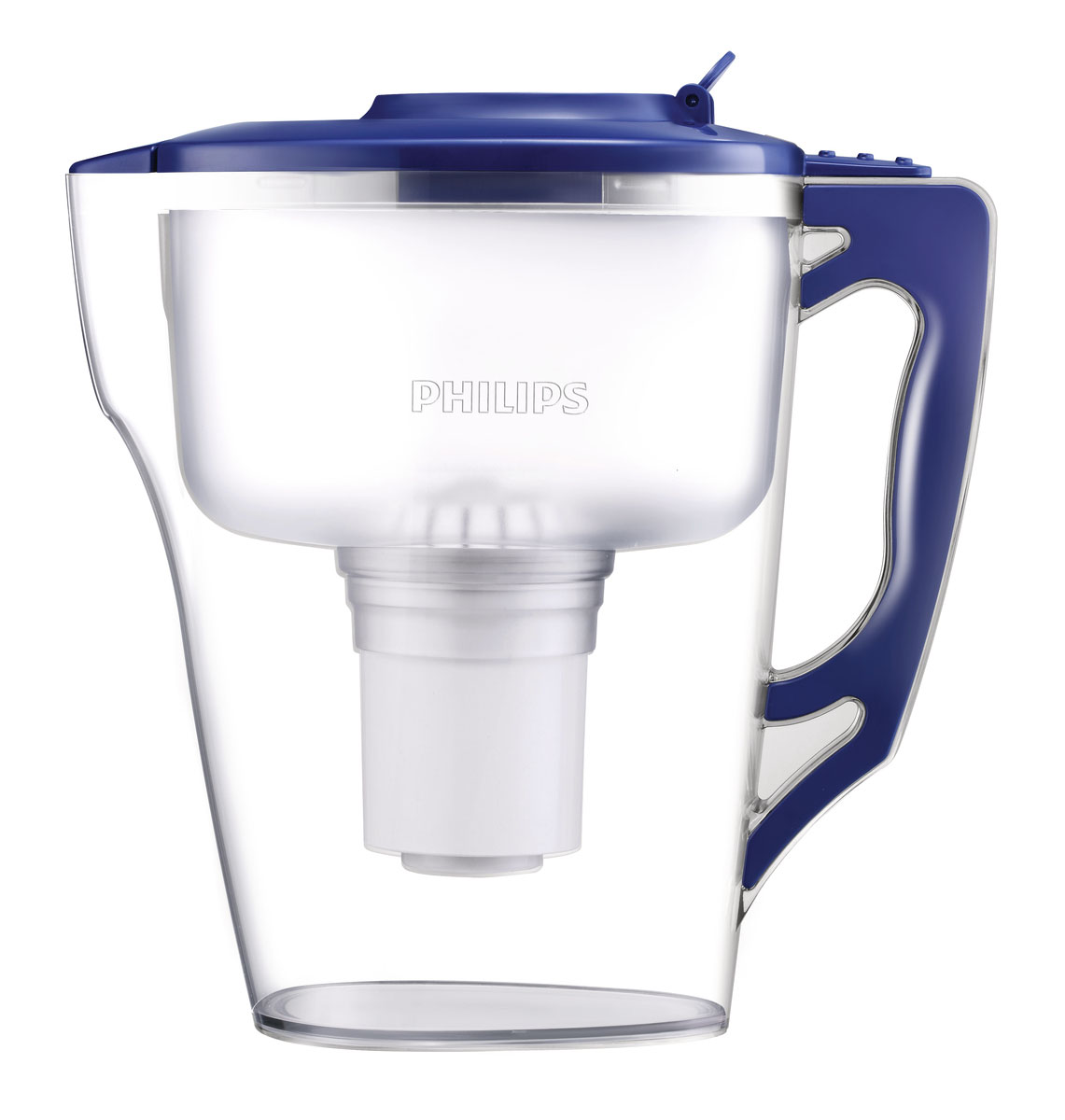
Your needs, this model
Does it fit your priorities?
Do you need a listed cup capacity to plan servings or refrigerator fit?
Philips gives 1.5 L for the filtered-water tank, not an exact cup-count capacity or external dimensions. A cup-based requirement is therefore not confirmed for this model.
Explore this need in the finder →Is a documented bacteria, virus or cyst result essential?
The leaflet markets up to 99.9% bacteria reduction under laboratory conditions, but the reviewed source does not name organisms and challenge conditions in a full performance data sheet. That evidence does not satisfy an essential test-result requirement.
Explore this need in the finder →Is an exact soluble-lead result essential?
The exact AWP2950/03 leaflet lists soluble-lead reduction as not applicable, so this configuration does not meet a lead-result requirement.
Explore this need in the finder →Do you require rechargeable, button-controlled electric dispensing?
No. AWP2950/03 is a gravity-fed pour-through pitcher; it has no powered outlet.
Explore this need in the finder →Philips AWP2950/03 is a pour-through pitcher documented in an exact Philips product leaflet and a Philips pitcher-family manual. Its key distinction is the AWP260/AWP261 one-piece cartridge: the leaflet describes a three-stage ultrafiltration route with granular activated carbon and a hollow-fiber membrane, rather than the AWP200/AWP201 carbon-and-resin cartridge found in some sibling models. The exact code is useful when identifying an existing unit. A US-specific offer or replacement-filter channel for this /03 code is not established here, so this is a reference assessment, not a US purchase recommendation.
What changes with this filter route
The AWP2950/03 leaflet names a 1.5-liter filtered-water tank, 0.15 liters-per-minute flow rate and 200-liter filter capacity. Philips calls the 1.5 liters the tank for filtered water; it is not an advertised cup count or the total capacity of every chamber in the pitcher. The 0.15 L/min figure is a manufacturer specification, not a guarantee that each fill will take exactly the same time. It is lower than the 0.25 L/min figure in the documented AWP200/AWP201 family. If you need a large ready-to-pour batch quickly, that difference matters more than the broad word “ultrafiltration.”
Philips specifies AWP260/AWP261 as the compatible replacement-filter family and describes the cartridge as a disposable one-piece design. The manual separately recommends replacement at least every 60 days; the 200-liter rating is a volume limit, not an extension of the time guidance. Philips does not say that every household will reach 200 liters before two months. Keep both instructions visible, track actual use, and do not stretch either interval because the water still tastes acceptable. The leaflet does not give external dimensions, a US-cup capacity or the materials/BPA status of the vessel, so check an actual unit before deciding that it fits a shelf or refrigerator door.
Read the bacteria language narrowly
The brochure describes a granular-carbon and hollow-fiber-membrane path, says the system reduces particles down to 0.01 micron, and advertises up to 99.9% bacteria reduction under laboratory conditions. It also lists chlorine, pesticides and chemicals, and says beneficial minerals are retained. Those are Philips claims in the product leaflet; the source reviewed here does not include a full, contaminant-by-contaminant test sheet with organisms, challenge water, conditions and certification scope. Philips explicitly lists soluble-lead reduction and water-hardness reduction as not applicable for this configuration. Do not infer a lead result, softening performance or a general guarantee from the broad filtration description.
Most importantly, Philips specifies municipal tap water as the input and warns against water of unknown source. A bacteria claim in a pitcher brochure is not a reason to use untreated surface water or to treat this vessel as a disinfection system. If microbiological protection is essential, look for the exact filter's test data, the organisms and conditions actually evaluated, and guidance appropriate to your water source. If you need lead reduction, the AWP2950/03 leaflet does not offer that result; choose a system with a relevant exact-model record instead.
Plan for the owner routine
The Philips family manual shows the AWP2950 among the models without a filter timer. That leaves replacement-date tracking to the owner. On first use, the manual's illustrated steps call for soaking the new cartridge in clean water for 15 minutes, shaking it gently, removing and shaking it for another 15–30 seconds, checking the seal, then seating it firmly. Philips says to fill the pitcher and discard the first two filtered loads. These are small tasks, but they are not the same as taking a cartridge out of a packet and drinking the first batch.
Care is also specific: the family manual says the pitcher is not dishwasher-safe, warns against freezing, and advises consuming filtered water within 24 hours while keeping it out of direct sunlight. Philips lists 5–38 °C municipal tap water and atmospheric pressure from 0 to 1 bar. This is a household pitcher, not a way to alter the source-water rules. A manual and calendar reminder are a better fit than this model for someone who wants electronics to prompt a change; the AWP2970/03 sibling adds a digital timer, although that timer does not measure actual liters filtered.
Who should compare it, and what to compare next
This code is most useful to a current owner who has AWP2950/03 printed on the product or leaflet and wants to identify the AWP260/AWP261 route. Its narrower reason to choose it over an AWP200/AWP201 sibling is the hollow-fiber stage and the maker's bacteria-related lab claim, not a larger tank, faster flow, lead reduction or documented softening. If cartridge sourcing for this exact suffix is difficult, that is a practical disadvantage: the family resemblance to another Philips pitcher does not prove that its cartridge fits.
For someone comparing the two hollow-fiber Philips codes, the AWP2970/03 adds a timer while the reviewed leaflets list the same AWP260/AWP261 family, 1.5-liter filtered-water tank, 200-liter rating and 0.15 L/min flow. AWP2950/03 avoids that electronic reminder but asks you to track the change date yourself. Philips' current US AWP2980WH/37 is different again: it is a powered pitcher using AWP225, not this gravity-fed AWP260/AWP261 model. Keep those operating plans and cartridges separate.
The practical decision is therefore conditional. If you already own an AWP2950/03, identify the cartridge by the printed AWP260/AWP261 code and follow the municipal-water, preparation and replacement instructions in the matching literature. If you are shopping in the US, do not buy on the strength of a similar Philips name or a compatible-looking photo; establish the exact body, filter and local manufacturer support first. This review preserves what Philips documents for the /03 code without turning a regional reference into a current US shortlist pick.
Key details at a glance
| Listed tank capacity | 1.5 L |
|---|---|
| Included filter | Philips awp260 261 hollow fiber |
| Stated filter capacity | 52.8 gal |
| Typical replacement interval | 2 months |
| Lead result in exact-filter test data | No |
| Reusable filter shell | No |
| What the filter is documented to reduce | Philips' exact leaflet describes three-stage ultrafiltration using non-woven fabric, granular activated carbon and a hollow-fiber membrane. It markets particle reduction down to 0.01 micron and up to 99.9% bacteria reduction under laboratory conditions, plus chlorine, pesticide and chemical reduction while retaining minerals. The leaflet does not provide organism-specific test conditions or a full performance table; those claims are not treated as a documented essential microbial result. It explicitly marks soluble-lead and water-hardness reduction as not applicable. |
| Use and care | Use municipal tap water only, within the Philips-listed 5–38 °C input range and atmospheric 0–1 bar pressure. The family manual warns against unknown-source water, dishwasher cleaning and freezing, and advises using filtered water within 24 hours away from direct sunlight. This is not a treatment route for microbiologically unsafe source water. |
| Manufacturer dimensions as listed | Philips' exact leaflet gives a 1.5 L filtered-water tank, not a cup count or external dimensions. |
| Replaceable filter inner core | No |
Use the exact model’s instructions for operating limits, supplied equipment and version differences.
Sources for this assessment
Check the exact filter setup before you shop.
Capacity, filter type and the written reduction claims belong to the pitcher-and-cartridge combination, not just the pitcher shape.