
Your needs, this model
Does it fit your priorities?
Do you need a listed cup count for serving or refrigerator-fit planning?
Philips gives 1.5 L for the filtered-water tank, not an exact cup count or outside measurements; those requirements are unconfirmed.
Explore this need in the finder →Is a bacteria, virus or cyst reduction result essential?
The exact AWP2915/10 leaflet lists bacteria removal as N/A and supplies no virus or cyst result; it cannot satisfy that essential need.
Explore this need in the finder →Would you like an older pitcher code in the library for model identification or comparison?
AWP2915/10 has exact manufacturer documentation and an owner-reference review. The evidence does not establish a US offer/support route, so the listing remains outside buying results.
Explore this need in the finder →Must the pitcher have powered button dispensing?
AWP2915/10 is a gravity-fed pour-through pitcher without powered dispensing.
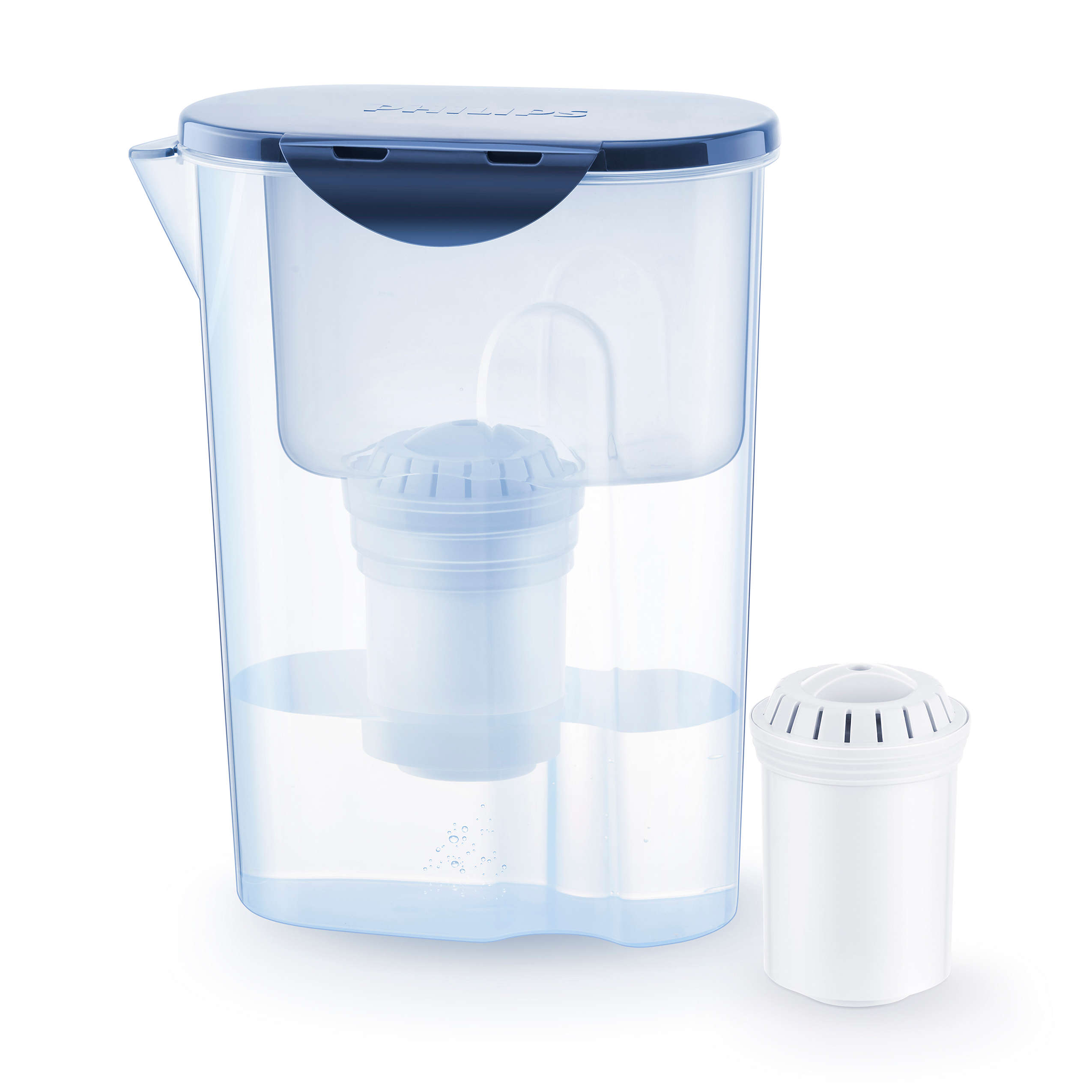
Explore this need in the finder →The Philips AWP2915/10 is a gravity-fed filter pitcher documented in a model-specific Philips leaflet. It belongs to the AWP200/AWP201 family: a four-stage microfiltration cartridge built around granular activated carbon and ion-exchange resin, with non-woven layers on either side. Philips lists a 1.5-liter filtered-water tank, a 0.25 L/min flow rate and a 200-liter filter rating. Those numbers identify its operating plan more usefully than the broad word “microfiltration.” The leaflet establishes an exact /10 model, but the sources reviewed here do not establish a US offer or a local US replacement-filter channel. This is an owner and model-identification reference, not a US buying recommendation.
Its practical distinction is the simple, unmonitored routine
The AWP2915 is a pour-through pitcher, not a powered dispenser. Its family manual names AWP2915 among the models without a cartridge timer. That leaves the replacement date to the owner. The leaflet rates the cartridge for 200 liters; the manual separately recommends replacing it at least every 60 days. A timer-free model can suit someone who is comfortable writing down a date or setting a phone reminder, but it is not the best fit if a visible countdown is necessary to keep up with maintenance.
Keep the volume and calendar limits separate. The 200-liter figure is the manufacturer’s stated cartridge capacity, while the manual’s 60-day recommendation is a separate time instruction. Philips does not claim that the pitcher senses liters, flow decline or filter condition. Higher use could reach the volume rating sooner; a lighter-use household could reach the time limit first. Do not extend either boundary because the water still tastes acceptable. The disposable cartridge is a one-piece replacement, not a refillable shell.
Know what the leaflet does and does not claim
Philips describes four stages: non-woven fabric, granular activated carbon, ion-exchange resin and another non-woven layer. The leaflet claims up to 99% reduction of chlorine and soluble lead under laboratory conditions, and says soluble-lead reduction remains 88% at the end of filter life. It also lists pesticide, VOC, chemical, microplastic and water-hardness reduction. These are manufacturer-stated results; the leaflet names Bureau Veritas laboratory testing but does not include a complete model-specific table of contaminant challenge concentrations, test-water conditions and certification scope. The practical implication is not that every household should expect the maximum percentage. Use the claim as a documented manufacturer statement and consult the exact performance record for any contaminant result that is essential to your decision.
Philips marks bacteria removal “N/A.” That is a clear limit, not an invitation to infer disinfection from the word microfiltration. It is not a pitcher for untreated surface water, a well of unknown quality or any source the manufacturer excludes. The specified input is mains or municipal tap water, between 5 and 38 °C and at atmospheric pressure of 0–1 bar. If microbial reduction is central to your choice, this product leaflet does not provide the needed result.
Plan around a modest ready-water tank
The 1.5-liter figure is explicitly the filtered-water tank capacity. It is not a stated total pitcher volume, cup count or external dimension. If you need to serve a known number of glasses or measure a refrigerator shelf, neither a familiar pitcher silhouette nor the 1.5 L figure supplies the missing measurement. The 0.25 L/min flow specification also describes a manufacturer rate, not a guaranteed fill time in every home. Treat the pitcher as a batch-and-store routine: refill, allow gravity filtration, then pour the water that has collected.
The exact AWP2915 leaflet advertises a dust-protective spout and one-piece disposable filter. Those details help distinguish it from other models in an old product box, but they do not establish dishwasher safety, body material, BPA status or replacement availability. Philips’ family manual advises using municipal tap water only, preparing the cartridge before first use, discarding the first two filtered fills, keeping the pitcher out of the freezer and using filtered water within 24 hours away from direct sun. Hand-wash the vessel as the matching manual directs.
Which neighboring model fits better?
The AWP2918/10 is a close AWP200/AWP201 sibling. Its leaflet lists the same filtered-tank volume, flow rate, 200 L filter rating and stated performance; the family manual also identifies it as a no-timer version. The difference visible in Philips’ product artwork is the exact body and lid presentation, not a documented change in treatment or capacity. The AWP2922/10 uses the same named replacement cartridge and common ratings, but adds a digital timer and a more explicitly described ergonomic handle. That reminder may help with the calendar task, but it does not convert the pitcher into a volume sensor.
If you are checking a unit already marked AWP2915/10, use the AWP200/AWP201 code and its own instructions rather than substituting the AWP260/AWP261 hollow-fiber cartridge documented for Philips’ AWP2950/03 and AWP2970/03. The family shares a brand and format, not a universal cartridge. If you are shopping in the US, the current Philips US pitcher directory reviewed here lists different models; that does not prove the AWP2915 was never sold in the country, but it leaves a current US purchase and support path unverified. Confirm the exact pitcher and replacement filter locally before buying. For an existing owner with a verified matching cartridge, this reference helps explain the no-timer maintenance routine and the maker’s stated claims without overstating either.
Use the exact model’s instructions for operating limits, supplied equipment and version differences.Key details at a glance
Listed tank capacity 1.5 L Included filter Philips AWP200/AWP201 GAC + ion-exchange cartridge Stated filter capacity 52.8 gal Typical replacement interval 2 months Lead result in exact-filter test data Yes Reusable filter shell No What the filter is documented to reduce The exact leaflet describes four-stage filtration with non-woven fabric, granular activated carbon, ion-exchange resin and another non-woven layer. Philips claims up to 99% chlorine and soluble-lead reduction under laboratory conditions and says lead reduction remains 88% at end of filter life; it also lists pesticide, VOC, chemical, microplastic and water-hardness reduction. The leaflet names BV laboratory testing but is not a full contaminant-by-contaminant table with challenge conditions and certification scope. Bacteria removal is explicitly N/A. These are manufacturer claims, not an independent performance guarantee. Use and care Use mains/municipal tap water only, within the exact leaflet's 5–38 °C input range and atmospheric 0–1 bar pressure. The family manual warns against unknown-source water, hot input and freezing, advises consuming filtered water within 24 hours away from direct sunlight, and directs hand cleaning. This is not a microbial treatment system. Manufacturer dimensions as listed No external dimensions or cup capacity are supplied in the exact leaflet; its 1.5 L figure is for the filtered-water tank. Microbial test result in exact filter data sheet No Replaceable filter inner core No Sources for this assessment
Check the exact filter setup before you shop.
Capacity, filter type and the written reduction claims belong to the pitcher-and-cartridge combination, not just the pitcher shape.