
Your needs, this model
Does it fit your priorities?
Are you identifying a pitcher already marked AWP2900/11, rather than selecting a current US purchase?
The exact Philips leaflet identifies this /11 code and its AWP200/AWP201 cartridge route. The current Philips US pitcher page reviewed here does not list it, so this record remains reference-only and cannot satisfy a current-US purchase need.
Explore this need in the finder →Is a verified lead-reduction data sheet essential for your decision?
Philips' leaflet makes a soluble-lead laboratory claim, but this review did not locate the exact model's full performance table or certification roster. Treat the matcher field as unknown and choose a product with the exact named-filter evidence you require.
Explore this need in the finder →Would a pump button or a larger ready-to-dispense tank change what you need?
AWP2900/11 is a gravity-fed pour-through model. Philips' current US AWP2980WH/37 is a separate powered pitcher using AWP225; similar brand and pitcher language do not make its filter, tank or dispensing method interchangeable.
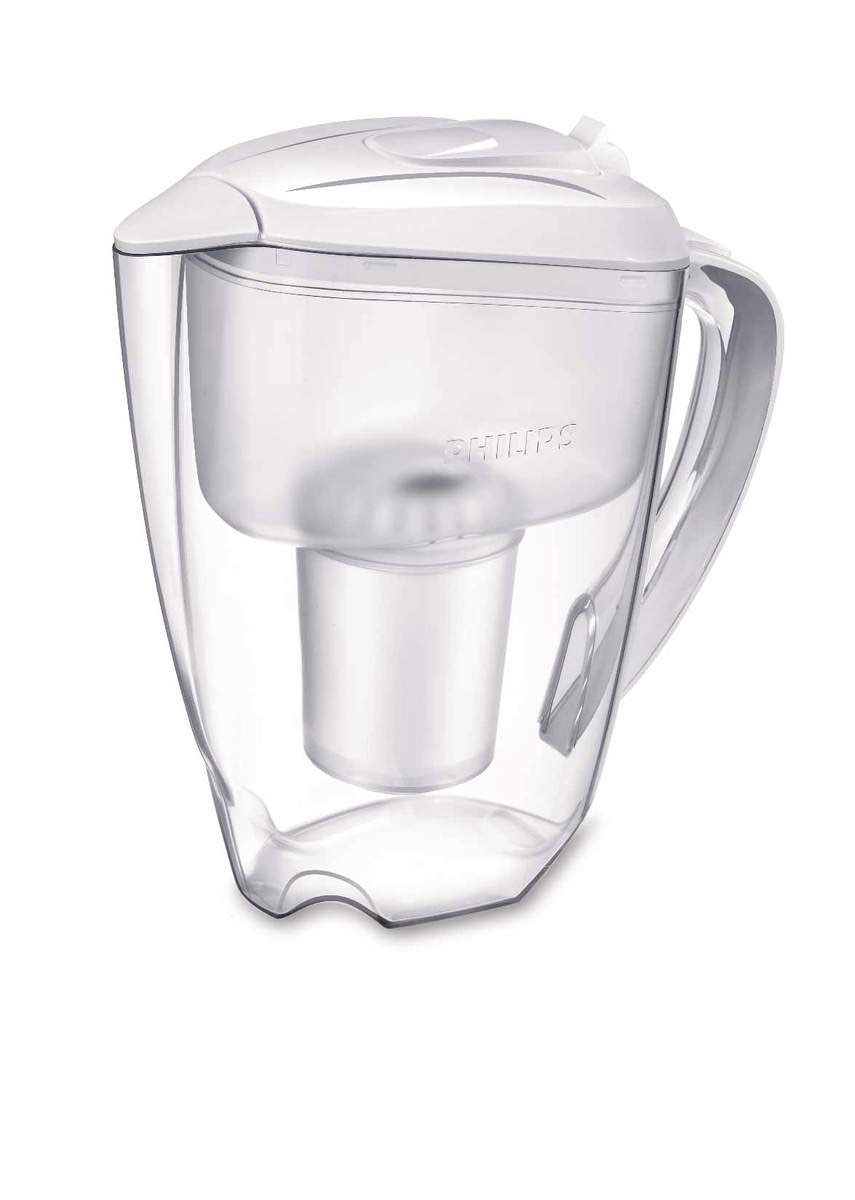
Explore this need in the finder →Philips AWP2900/11 is a gravity-fed pitcher documented in a Philips regional product leaflet and a multilingual pitcher-family manual. The exact leaflet names a 1.5-liter filtered-water tank, AWP200/AWP201 one-piece cartridge, 0.25-liter-per-minute flow rate and a 200-liter filter-capacity rating. This page is for identifying an existing /11 unit and understanding its archived instructions—not a current U.S. shopping recommendation. Philips' current U.S. pitcher directory checked for this review lists four different items and does not establish a U.S. offer or lifecycle for AWP2900/11.
What the AWP2900/11 is—and what the capacity number means
This is a pour-through pitcher, not a button-dispensing reservoir. The manufacturer's product leaflet describes four-stage microfiltration with non-woven fabric, granular activated carbon and ion-exchange resin. It calls 1.5 L the tank for filtered water. That is useful finished-water capacity, but it is not a cup-count claim or an external-dimension specification; neither cups nor body measurements are stated in the exact leaflet. If you are checking refrigerator clearance or planning several servings at once, measure the actual vessel and do not translate 1.5 L into an advertised cup size.
The stated 0.25 L/min is a maker specification, not a promise that every pour-through session will run at that rate. At that rate, an empty 1.5 L filtered-water tank would take about six minutes to fill. The product makes sense for someone comfortable pouring into the reservoir, waiting for gravity filtration, and keeping a smaller batch of filtered water available. It is not the instant, button-activated routine of Philips' separate AWP2980WH/37 powered pitcher.
Cartridge routine and first use
Philips lists the single-piece replacement cartridge as AWP200/AWP201 and gives it a 200 L capacity. Its family manual separately recommends changing the cartridge every 60 days under its stated household-use assumption. These are different instructions: do not extend the time schedule just because the filter has not reached 200 L, and do not assume every household will reach 200 L within two months. The manual says the AWP2900 has no filter-cartridge timer, so owners should record the replacement date and monitor use themselves.
The illustrated English instructions are more involved than a quick rinse. Philips tells owners to soak the new cartridge in clean water for 15 minutes, shake it gently, remove it and shake for 15–30 seconds, then confirm the sealing ring is seated and press the filter down firmly. Fill the pitcher with tap water and discard the first two filtered loads. Hand-wash the pitcher; the manual says it is not dishwasher-safe. It also advises using filtered water within 24 hours, keeping it out of direct sunlight, and not putting the pitcher in a freezer. Those details matter for an owner who wants minimal preparation or hands-off replacement reminders.
Read the filtration claims conservatively
The exact Philips leaflet advertises up to 99% reduction of soluble lead and chlorine in laboratory conditions and says soluble-lead reduction is 88% at the end of filter life. It also describes pesticide and VOC reduction and water-hardness reduction. Those statements are Philips' claims in a product leaflet; this review did not locate a model-specific performance data sheet with the full test conditions, contaminant-by-contaminant results, or certification roster. The numerical claim is worth noting when identifying the product, but it should not be treated as a substitute for a full report or for a certified result that matches your particular water concern.
Philips lists bacteria removal as not applicable, and the instructions specify municipal tap water rather than water of unknown source. The stated input range is 5–38 °C. It is not a purifier or a microbial-treatment system, and its marketing language cannot make unsafe water safe. If your source or concern requires microbiological protection, follow local health advice and choose a treatment route whose exact test evidence and use conditions fit the need.
Who should use this record, and what to compare instead
For an existing owner, the exact suffix is important: this review concerns AWP2900/11 and the AWP200/AWP201 cartridge family, not every Philips pitcher. Do not transfer this filter, tank or performance description to a different AWP model by appearance alone. The current U.S. AWP2980WH/37, for example, is documented as a powered 3-liter pitcher with an AWP225 cartridge and USB-C-rechargeable dispensing; it is a different operating plan, not an updated AWP2900 body.
For a U.S. buyer who wants a current, documented purchase, use the current model assessments and compare their exact pitcher-and-filter combinations. The AWP2900/11 has no confirmed current U.S. offer here, no verified U.S. lifecycle, and no Amazon purchase link. It remains useful as a reference for its real owner—especially for confirming cartridge and care instructions—but its regional code, missing total cup capacity, manual replacement reminder, and incomplete public performance record make it a poor stand-in for a verified present-day shortlist.
Key details at a glance
| Listed tank capacity | 1.5 L |
|---|---|
| Stated filter capacity | 52.8 gal |
| Typical replacement interval | 2 months |
| Reusable filter shell | No |
| What the filter is documented to reduce | Philips' AWP2900/11 leaflet describes four-stage microfiltration using non-woven fabric, granular activated carbon and ion-exchange resin. It claims up to 99% soluble-lead and chlorine reduction under laboratory conditions and states soluble-lead reduction is 88% at the end of filter life; it also lists pesticide/VOC reduction and water-hardness reduction. The exact leaflet cites a test agency but links no model-specific performance sheet or certification roster, so these are presented as manufacturer leaflet claims, not an independently reviewed certification or complete contaminant table. The leaflet lists bacteria removal as N/A. |
| Use and care | Use municipal tap water only, within the leaflet's 5–38 °C input range and atmospheric 0–1 bar pressure. The manual says not to use water of unknown source, not to wash the pitcher in a dishwasher, not to freeze it, and to consume filtered water within 24 hours away from direct sunlight. It is not a purifier or disinfection system. |
| Manufacturer dimensions as listed | Philips' exact leaflet provides no external dimensions; the 1.5 L figure is the filtered-water tank, not a confirmed total-pitcher or cup capacity. |
| Microbial test result in exact filter data sheet | No |
Use the exact model’s instructions for operating limits, supplied equipment and version differences.
Sources for this assessment
Check the exact filter setup before you shop.
Capacity, filter type and the written reduction claims belong to the pitcher-and-cartridge combination, not just the pitcher shape.